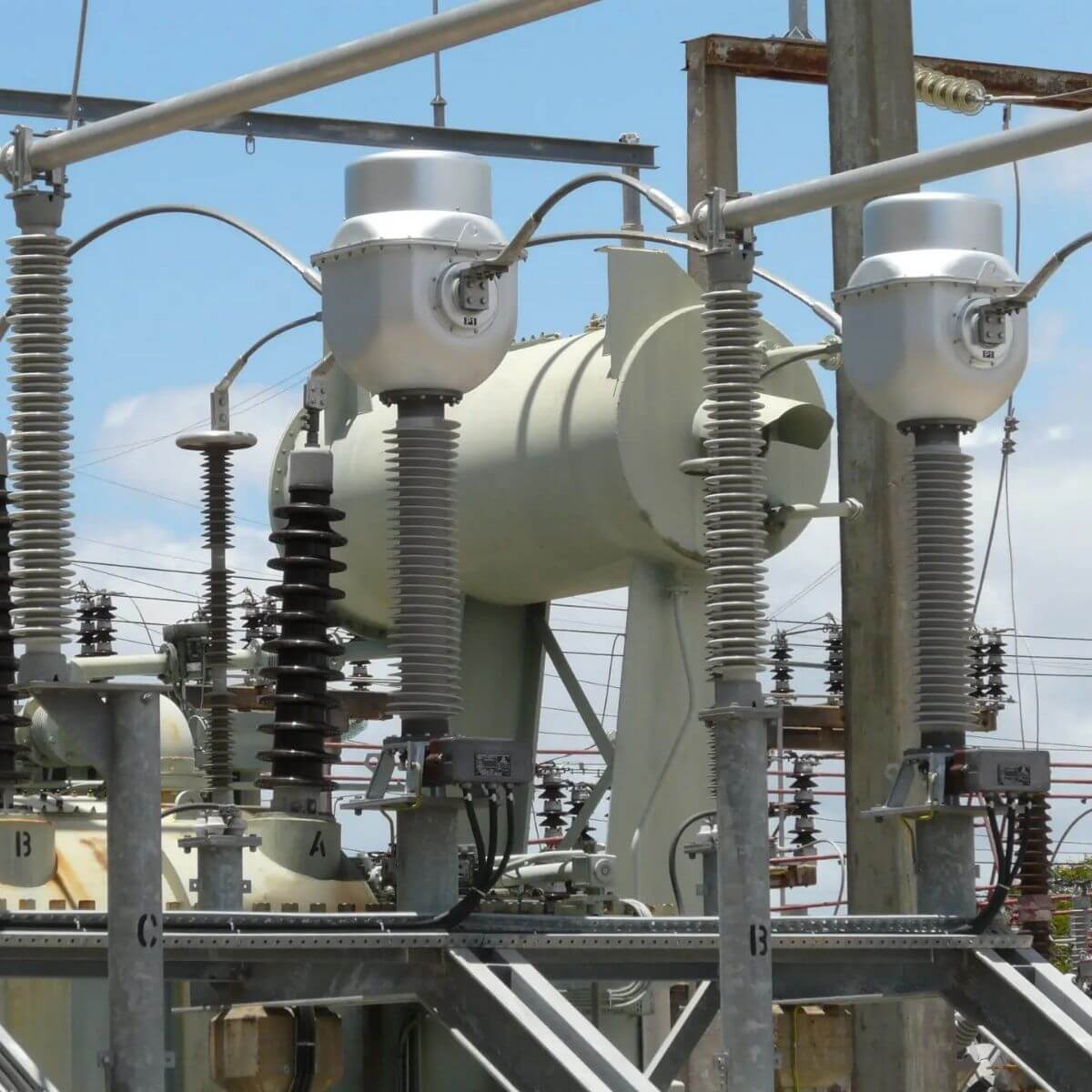
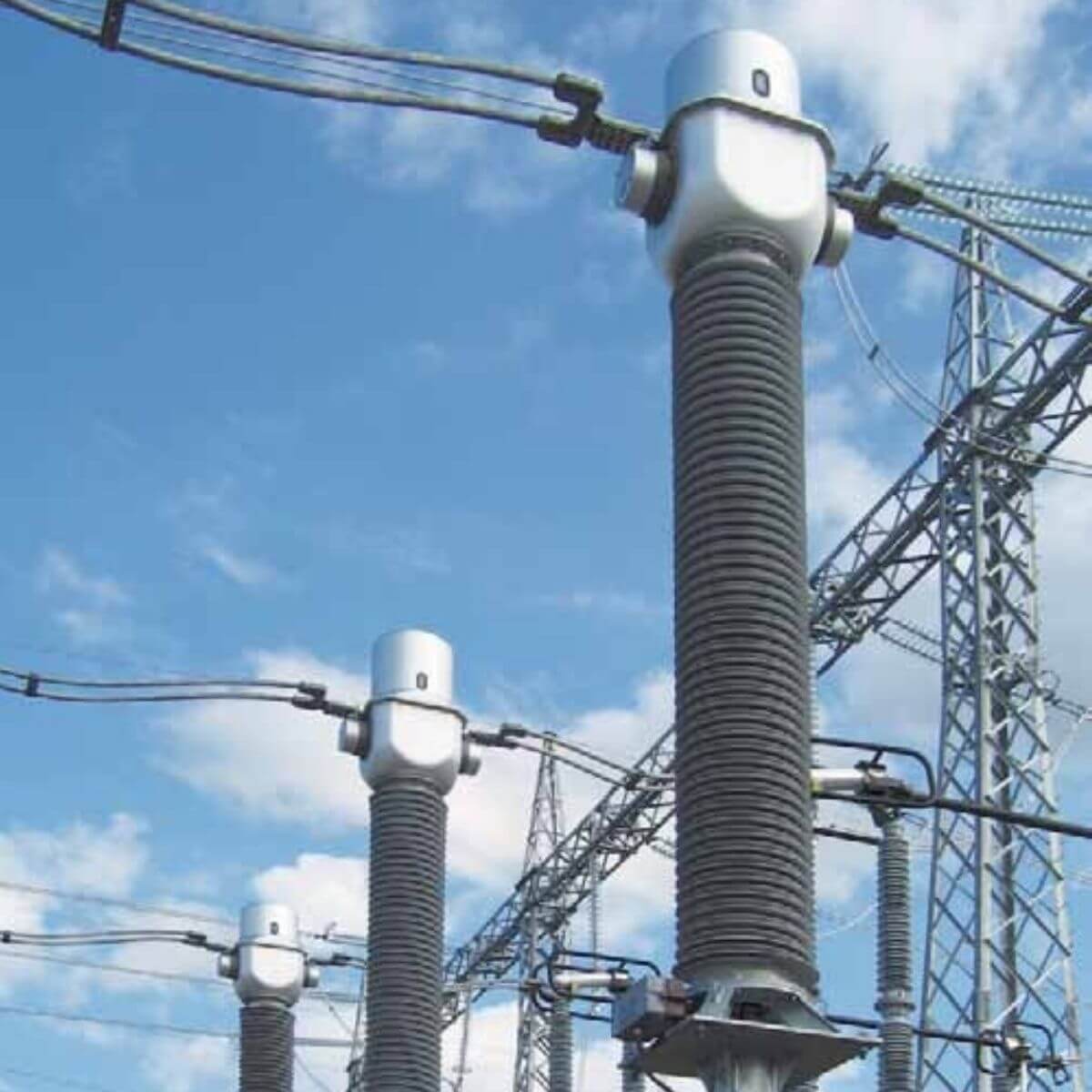
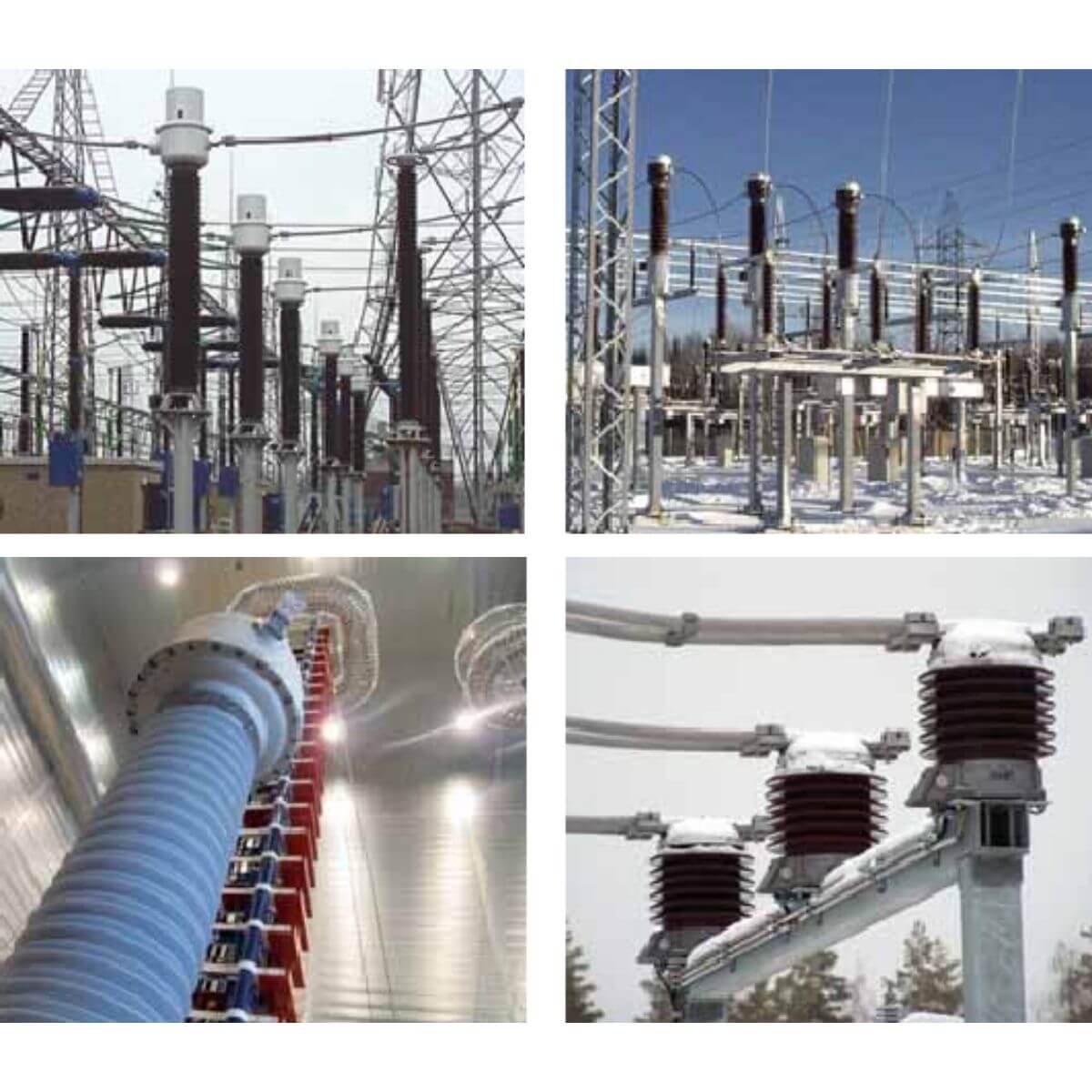
How exactly do current transformers work? Simply put, they step down the primary current of a high-voltage line to proportional, measurable values and isolate measuring devices, meters, or relays from the high-voltage power circuit. They also enable safe current measurement in systems where direct measurement with available instruments would be impossible.
Current transformers are ideal for installation at measurement points due to their very high accuracy class. Their ideal frequency response makes them perfect for power quality monitoring and harmonic analysis.
Let's examine the types of high-voltage current transformers available in our product line.
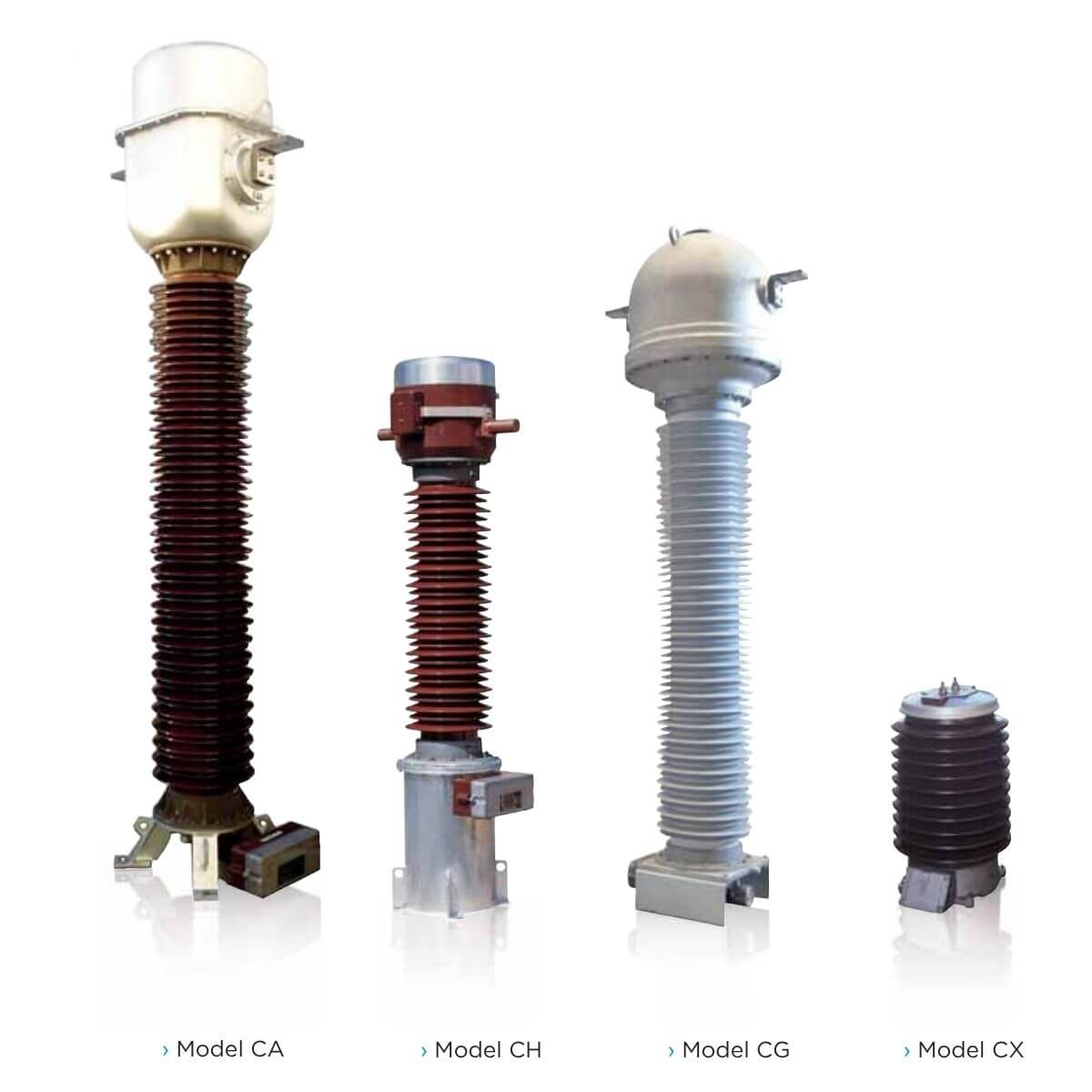
How are HV current transformers in paper-oil insulation constructed? Before describing their construction, it's worth noting that we offer customers two types of transformers in this category.
Let's examine what each consists of.
HV current transformer, CA range – Upper core type
In CA range current transformers, the active components are located in the upper section inside the metal housing. The housing itself acts as a low-voltage shield, and the main paper-oil insulation is wrapped around and terminated with a high-voltage shield.
Depending on the design, the primary winding can be either a rod or a busbar. The secondary conductors pass through an insulated paper-oil capacitive bushing with multiple shields for proper electric field distribution.
What are the specifications of CA type current transformers?
- Max. operating voltage from 72.5 kV to 765 kV (depending on model)
- Support for primary currents from 1 A to 5000 A and short-circuit currents up to 120 kA
Thanks to its reinforced design resistant to internal arc faults, the CA type current transformer enables measurement of high short-circuit currents. Its use also ensures the reliability of protected infrastructure.
Selecting a current transformer for a specific application involves more than just specifying the system voltage. Numerous technical, operational, and regulatory factors must also be considered.
What are the most important criteria for selecting current transformers?
- Network parameters – Start by determining factors such as rated primary and secondary current; knowledge of supply voltages is essential here.
- Transformer function – Determine whether it will be used for measurement, protection, or both purposes.
- Environmental and operating conditions – Consider the conditions in which the transformer will operate, primarily including pollution level, operating temperature range, altitude above sea level, and mechanical stress requirements.
- Regulatory requirements and safety – Verify exactly which standards your HV current transformer must meet.
As you can see, selecting a paper-oil insulated current transformer requires consideration of numerous key factors. Only after detailed analysis of these factors can you select a solution that ensures reliability and safe operation of measuring instruments in high-voltage systems.
Paper-oil insulated current transformers enable safe and accurate current measurement in high-voltage lines. Our product line includes various models with different specifications depending on the intended application.
The selection of the appropriate transformer depends on network parameters, device function (measurement or protection), environmental conditions, and regulatory requirements. Please contact us to select the best solution for your project.